Why we ended up building it
There is one message everyone in the diaspora has written, or read: “is anyone flying to Dakar this week?”
It happens in a WhatsApp group of two hundred people. Someone answers, you swap numbers, you meet on a Saturday in a car park. You hand a box to a stranger vouched for by a cousin, you pay in cash, and you wait. Most of the time, it works. It works remarkably well, in fact: that is how clothes, school supplies, spare parts and presents have been moving for thirty years.
The problem only shows up the day it does not work. The parcel does not arrive. The number stops answering. There is no record, no proof of handover, no receipt, nobody to call. You cannot even say what happened: lost, forgotten, kept. And because the person was doing you a favour, you do not dare push. You lose the parcel, and often you lose the relationship as well.
On the other side, there are the carriers. They are reliable, they are considerably more expensive, and they do not deliver everywhere. To get five kilos to someone you know, that is not a solution, it is giving up.
yadony is not trying to replace the traveller with a lorry. The traveller already exists, is already flying, and their suitcase is already half empty. What was missing was not the transport: it was the record. Knowing who is carrying, when, and being able to prove it. Hence the identity check, the four scans, the timestamped photos, and a payment that does not move until the parcel is in the recipient's hands.
We are opening with four arrival cities, not forty, because we would rather have one corridor that genuinely works than a map that looks impressive. We have no figures to show: we are starting out. If you use the app and something strikes you as shaky, write to us. At this stage, that is the most useful feedback we can get.
The rest happens in the app
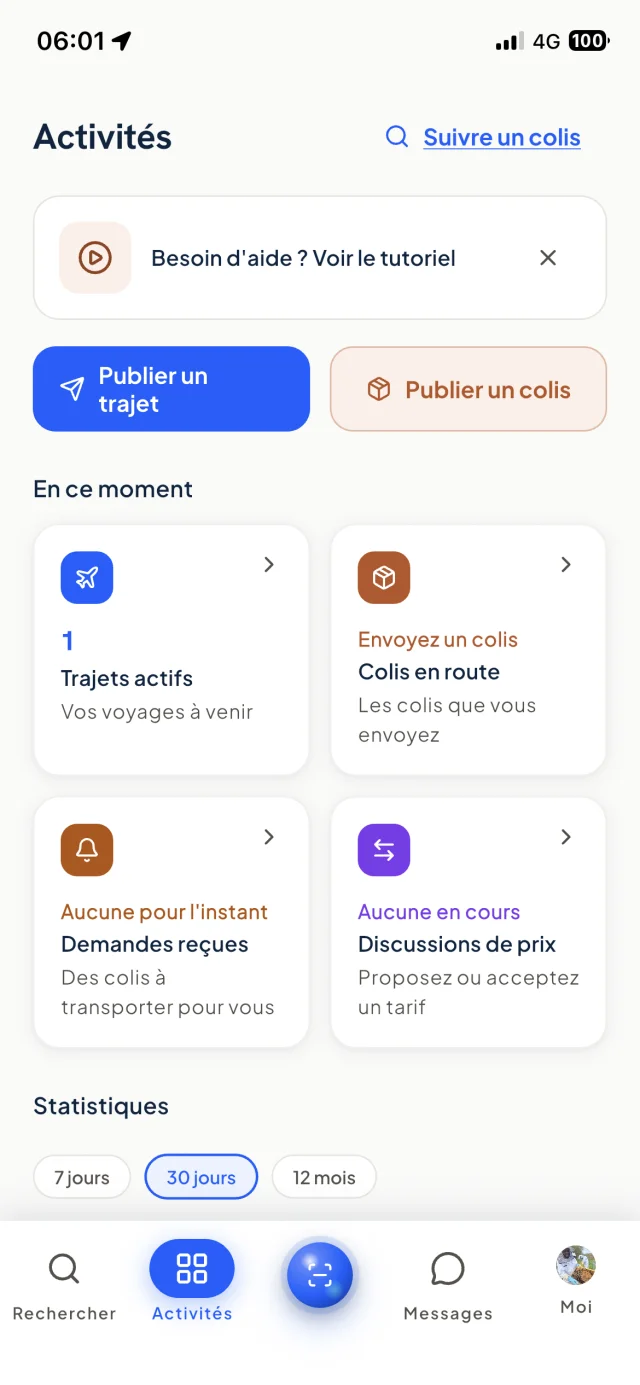
Posting a parcel, comparing travellers, scanning, tracking, paying: it is all in there. This site exists only to explain how it works before you download it.